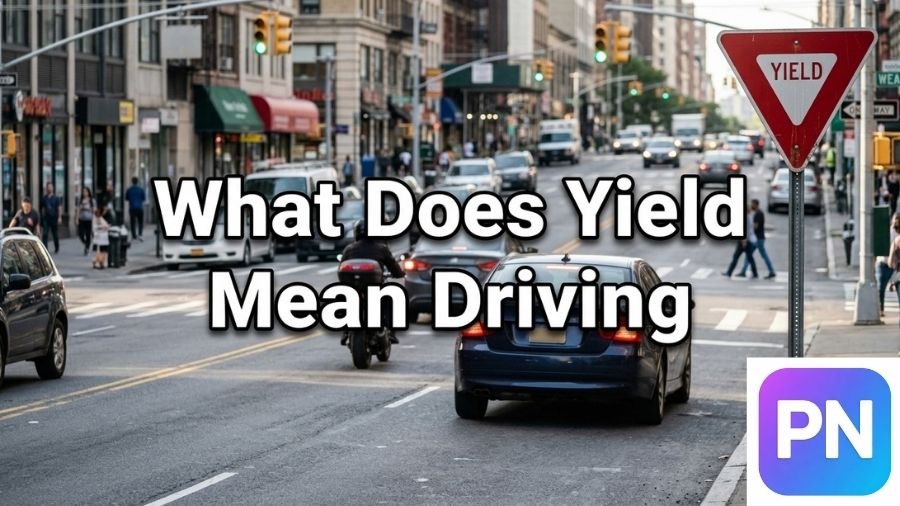
What Does Yield Mean Driving? Full Explanation (2026)
Have you ever seen a triangular road sign that says “YIELD” and wondered exactly what it means? Many new drivers and learners search for “what does yield mean driving” because understanding traffic signs is essential for road safety and passing driving tests.
Yield in driving means giving the right-of-way to other vehicles, pedestrians, or cyclists before proceeding. Drivers must slow down, assess traffic conditions, and allow others to go first when necessary. Unlike a stop sign, a yield sign does not always require a complete stop.
Understanding yield rules can help prevent accidents, improve traffic flow, and make you a safer driver.
Quick Answer: What Does Yield Mean in Driving?

Yield in driving means to give the right-of-way to others before continuing. When approaching a yield sign, drivers should slow down, check for traffic and pedestrians, and proceed only when it is safe.
Understanding the Meaning of Yield in Driving
The word yield means to give way or allow someone else to go first.
In driving, yielding is a traffic rule that requires a driver to:
- Slow down
- Observe surrounding traffic
- Allow other road users to proceed first
- Continue only when safe
Yielding helps reduce collisions at intersections, roundabouts, highway merges, and pedestrian crossings.
Yield vs Stop Sign
Many people confuse yield signs with stop signs.
| Traffic Sign | What You Must Do |
|---|---|
| Yield Sign | Slow down and give right-of-way if necessary |
| Stop Sign | Come to a complete stop every time |
| Red Light | Stop until the signal changes |
| Green Light | Proceed if the way is clear |
A yield sign allows traffic to keep moving when conditions are safe.
Also Read This: What Does JW Mean in Text Message
Yield in Traffic and Road Rules
What Does a Yield Sign Look Like?
A yield sign is:
- An upside-down triangle
- Red border
- White center
- Usually displays the word “YIELD”
It is designed to be instantly recognizable from a distance.
Common Places You Will See Yield Signs
- Highway entrance ramps
- Roundabouts
- Merge lanes
- Intersections
- Pedestrian crossings
- Bicycle crossings
Why Is Yielding Important?
Yielding is one of the most important driving skills.
Benefits include:
- Preventing accidents
- Protecting pedestrians
- Improving traffic flow
- Reducing road rage
- Creating safer intersections
Failing to yield is a common cause of crashes worldwide.
Situations Where Drivers Must Yield
Yield to Pedestrians
Pedestrians usually have the right-of-way in crosswalks.
Example:
A person begins crossing the street. You must slow down and allow them to cross safely before continuing.
Yield at Roundabouts
Vehicles already inside a roundabout generally have the right-of-way.
Example:
Before entering, wait for a safe gap in traffic.
Yield When Merging
Drivers entering a highway often need to yield to traffic already traveling on the road.
Example:
A car entering from an on-ramp should allow highway traffic to continue without interruption.
Yield to Emergency Vehicles
Emergency vehicles with flashing lights and sirens should be given priority.
Examples include:
- Ambulances
- Fire trucks
- Police vehicles
Move aside safely and let them pass.
What Happens If You Fail to Yield?
Failing to yield can result in:
- Traffic tickets
- Fines
- Points on your license
- Increased insurance costs
- Traffic accidents
- Legal consequences
Many traffic violations occur because drivers incorrectly assume they have the right-of-way.
Real-Life Examples of Yield in Driving
Understanding real-world situations makes the concept easier.
Example 1: At a Yield Sign
You approach a yield sign and see another car coming from the left.
Correct action:
- Slow down
- Allow the vehicle to pass
- Continue when clear
Example 2: Entering a Highway
You are entering a busy freeway.
Correct action:
- Match traffic speed
- Look for an opening
- Yield to vehicles already on the freeway
Example 3: Pedestrian Crossing
A pedestrian steps into a marked crosswalk.
Correct action:
- Slow down
- Stop if needed
- Let the pedestrian cross
Common Misunderstandings About Yielding
Myth 1: Yield Means Stop Every Time
False.
You only need to stop if traffic, pedestrians, or road conditions require it.
Myth 2: Larger Vehicles Always Have Right-of-Way
False.
Right-of-way is determined by traffic laws, not vehicle size.
Myth 3: Yield Signs Can Be Ignored If You’re in a Hurry
False.
Ignoring a yield sign can cause serious accidents and traffic violations.
Yielding and Defensive Driving
Defensive drivers constantly watch for situations where yielding may be necessary.
Defensive Driving Tips
- Watch for pedestrians
- Check blind spots
- Scan intersections
- Maintain safe following distances
- Anticipate other drivers’ mistakes
Being prepared to yield can prevent many accidents.
How Context Changes the Meaning of Yield
Although this article focuses on driving, the word yield can have different meanings in other contexts.
| Context | Meaning |
|---|---|
| Driving | Give the right-of-way |
| Agriculture | Amount produced or harvested |
| Finance | Return on an investment |
| General English | To give way or surrender |
When discussing road safety, yield specifically refers to allowing others to proceed first.
Common Driving Scenarios and Correct Responses
Scenario: Busy Intersection
Action:
Yield to vehicles that already have the right-of-way.
Scenario: School Crossing
Action:
Yield to children and crossing guards.
Scenario: Bicycle Lane
Action:
Yield to cyclists before turning across the lane.
Scenario: Roundabout Entrance
Action:
Yield to vehicles already circulating.
Frequently Asked Questions
What Does Yield Really Mean in Driving?
Yield means giving the right-of-way to another vehicle, cyclist, or pedestrian before proceeding.
Is Yielding Mandatory?
Yes. Traffic laws require drivers to yield in specific situations.
Do You Always Stop at a Yield Sign?
No. You only stop when necessary to avoid interfering with other road users.
Who Has the Right-of-Way at a Yield Sign?
Traffic already moving through the intersection or roadway generally has the right-of-way.
Can You Get a Ticket for Not Yielding?
Yes. Failing to yield can result in fines, penalties, and points on your driving record.
Is Yielding Important for New Drivers?
Absolutely. Learning when and how to yield is essential for safe driving and passing driving exams.
What Is the Difference Between Yield and Stop?
A stop sign requires a complete stop every time. A yield sign requires slowing down and giving right-of-way when necessary.
Key Takeaways
✅ Yield means giving the right-of-way to others.
✅ Drivers should slow down and assess traffic conditions.
✅ A complete stop is only required when necessary.
✅ Yield signs are commonly found at merges, roundabouts, and intersections.
✅ Proper yielding improves safety and reduces accidents.
Conclusion
Now you fully understand what yield means in driving. In simple terms, yielding means allowing other vehicles, pedestrians, or cyclists to go first when traffic rules require it. It is a crucial driving skill that helps keep roads safe and traffic moving smoothly.
Whether you’re preparing for a driving test, learning road signs, or simply improving your driving knowledge, understanding when and how to yield will make you a safer and more confident driver.

Hi, I’m Jason Hartley. I work at PickupNest.com and specialize in nicknames and pickup lines, creating fun, original, and effective content that helps people connect with confidence.