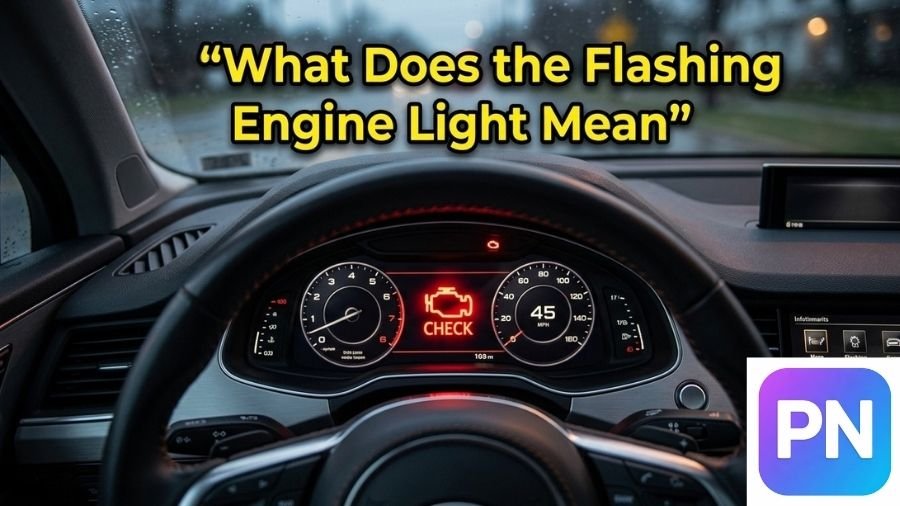
🚗 What Does the Flashing Engine Light Mean (2026)
A flashing engine light is one of the most serious warnings you can see on your car’s dashboard, and many drivers search online asking “What Does the Flashing Engine Light Mean” when it suddenly appears while driving. This warning usually means your vehicle is facing a critical engine problem, most commonly a severe engine misfire, which can quickly damage important parts like the catalytic converter if not addressed immediately. Unlike a steady check engine light, a flashing one signals urgency and should never be ignored.
In simple terms, a flashing engine light is your car’s way of saying something is seriously wrong and you need to take action right away.
⚡ Quick Answer: What Does the Flashing Engine Light Mean?

What Does the Flashing Engine Light Mean?
It means your car has a serious engine misfire or critical fault that can cause major damage if you keep driving. You should stop driving immediately and get the vehicle checked by a mechanic.
🔧 What Does a Flashing Engine Light Mean in Detail?
When your car’s engine control unit (ECU) detects a problem, it turns on the check engine light. But when the issue is urgent and potentially damaging, the light starts flashing instead of staying solid.
A flashing engine light usually points to:
- Engine misfires
- Unburned fuel entering the exhaust system
- Faulty spark plugs or ignition coils
- Fuel delivery problems
- Catalytic converter risk
This is not a minor warning. It is your car’s way of saying:
👉 “Stop driving before I get seriously damaged.”
Also Read This: K Meaning in Text
⚠️ Common Causes of a Flashing Engine Light
1. Engine Misfire (Most Common Cause)
An engine misfire happens when one or more cylinders fail to burn fuel properly. This can lead to:
- Loss of power
- Rough engine vibration
- Poor fuel efficiency
- Increased emissions
Misfires are dangerous because unburned fuel can overheat and damage the catalytic converter.
2. Faulty Spark Plugs or Ignition Coils
Spark plugs and ignition coils are responsible for igniting fuel inside the engine.
If they fail:
- Engine runs unevenly
- Car may shake or jerk
- Fuel is not burned properly
This often triggers a flashing engine light.
3. Fuel System Problems
Problems in fuel delivery can also cause serious engine issues, such as:
- Clogged fuel injectors
- Weak fuel pump
- Incorrect air-fuel mixture
This leads to unstable engine performance and misfires.
4. Catalytic Converter Damage Risk
The catalytic converter reduces harmful emissions. But when raw fuel enters it due to misfires, it can:
- Overheat
- Melt internally
- Fail completely
Replacing it is expensive, which is why a flashing light should never be ignored.
5. Sensor Failures
Modern cars rely on sensors like:
- Oxygen sensor
- Mass airflow sensor
- Crankshaft position sensor
If any of these fail, the engine may run incorrectly and trigger the warning.
🚨 Is It Safe to Drive with a Flashing Engine Light?
No. A flashing engine light means you should avoid driving as much as possible.
If you continue driving, you risk:
- Severe engine damage
- Catalytic converter failure
- Complete engine breakdown
- Very expensive repairs
What you should do immediately:
- Pull over safely
- Turn off the engine
- Check for visible issues (smoke, shaking, smell of fuel)
- Call a mechanic or roadside assistance
🧠 Flashing vs Solid Check Engine Light
| Light Type | Meaning | Severity | Action Needed |
|---|---|---|---|
| Solid check engine light | Minor or moderate issue | Medium | Schedule service soon |
| Flashing engine light | Serious engine misfire or damage risk | High | Stop driving immediately |
🔍 Symptoms That Come With a Flashing Engine Light
If your engine light is flashing, you may also notice:
- Engine shaking or vibrating
- Loss of acceleration power
- Strange fuel smell
- Poor fuel economy
- Rough idling
- Engine stalling
These symptoms confirm that the issue is urgent.
🛠️ How Mechanics Diagnose the Problem
A professional mechanic will usually:
1. Scan the ECU
They use an OBD-II scanner to read error codes.
2. Inspect ignition system
Spark plugs, coils, and wiring are checked.
3. Check fuel system
Fuel pressure and injectors are tested.
4. Examine exhaust system
Catalytic converter condition is evaluated.
This helps identify the exact cause of the flashing light.
💡 Examples of Real-Life Situations
Example 1: Highway Driving
“You’re driving on the highway and suddenly the engine light starts flashing, and the car begins shaking.”
👉 Likely cause: engine misfire or ignition failure.
Example 2: Cold Start Problem
“The car starts rough in the morning and the light flashes for a minute.”
👉 Likely cause: spark plug or coil issue.
Example 3: Sudden Power Loss
“The car loses power while accelerating and the light starts blinking.”
👉 Likely cause: fuel delivery or sensor malfunction.
❓ FAQ – Common Questions
What does a flashing engine light really mean?
It means your engine has a serious misfire or fault that can damage important parts if ignored.
Is a flashing engine light dangerous?
Yes. It indicates a high-risk engine problem that can lead to expensive repairs if you keep driving.
Can I drive a short distance with it flashing?
Only if absolutely necessary to reach a safe place or mechanic. Otherwise, avoid driving.
What is the most common cause?
The most common cause is an engine misfire due to faulty spark plugs or ignition coils.
Will the light turn off by itself?
Sometimes it may stop flashing temporarily, but the underlying problem usually remains.
🏁 Conclusion
A flashing engine light is one of the most serious warnings your vehicle can give. It usually indicates an engine misfire or critical system failure that can quickly lead to expensive damage if ignored.
In simple words, it means:
👉 “Stop driving and get your car checked immediately.”
Now that you understand what it means, you can respond quickly and protect your engine from major failure and costly repairs.

Hi, I’m Jason Hartley. I work at PickupNest.com and specialize in nicknames and pickup lines, creating fun, original, and effective content that helps people connect with confidence.